How to safely enjoy your outdoor fireplace?
July 6, 2021
With the return of warm weather, are you looking to extend your evenings outdoors around a fire? Here is our guide to enjoying your outdoor fireplace worry-free.
Do your research
Gas fireplace or wood fire? Part of the answer lies… in your municipal regulations. Indeed, in many cities, including Montreal, wood-burning fireplaces are simply prohibited due to the fine particles they emit during combustion. Open-air fires are also forbidden there. In other municipalities, rules vary from one sector to another. To avoid unpleasant surprises, a quick check with your municipality is necessary.
Take the opportunity to check if a permit is required to install an outdoor fireplace and to learn about current standards regarding the location or distance between the fireplace and the house, fence, shrubs, and potentially flammable materials. In many cases, the hearth and chimney must be equipped with spark arresters. Good to know!
Evaluate the possibilities
Wood, natural gas, ethanol, or propane; fixed or portable installation… There are various models of outdoor fireplaces. The choice is a matter of taste, budget, and—once again—municipal regulations. Each type of installation has its advantages but also comes with a few warnings.
Gas fireplaces
Even if they don’t give off the smell of a wood fire, gas fireplaces have a knack for adding ambiance to a backyard. Most importantly, you can easily turn the flames on and off, which is practical and safe—provided you ensure the installation is working correctly. You must therefore choose a certified model and comply with the manufacturer’s instructions.
Generally, outdoor fireplaces are propane-powered. To limit risks, you should regularly check the condition of the tank. Does it look worn, damaged, or has it reached its expiration date? Replace it without delay.
Also pay attention to the various components connected to the tank, such as hoses, seals, and fittings, to avoid any gas leaks. Fortunately, a rotten egg smell is added to propane, which should certainly alert you!
And remember: never store tanks indoors, whether they are full or empty.
Wood-burning fireplaces
Wood-burning fireplaces offer a more traditional experience, including the smell and crackling sound. However, the risk of fire spreading is greater with this type of fireplace. That is why it is recommended to use a device equipped with a spark arrester and a solid base to contain the embers.
Even though it may be tempting, do not use accelerant liquids to start or feed the flames. Similarly, avoid burning construction waste, treated wood, or other materials, as they could release toxic fumes. To prevent flare-ups, do not overfill the hearth; it is better to add logs as you go.
Most importantly, check that your fire is completely extinguished before going back inside. To be certain, you can douse the embers with water or smother the flames with sand.
Protect yourself
A safe installation
Regardless of your type of fireplace, ensure it is properly installed to limit the risk of fire and injury. The device must always be placed on a stable, non-flammable surface (such as gravel, packed earth, or concrete). Avoid placing it in a covered space, such as a roofed deck. Ensure the fire is at a safe distance from combustible materials: dry wood, hedges, and propane tanks, among others.
Never leave a fire unattended
Before lighting an open-air fire, check the SOPFEU notices. Also, avoid lighting a fire on very windy or dry days.
Sit at a safe distance from the flames and with your back to the wind to avoid being hit by embers. Similarly, be particularly careful with your clothing, such as your sleeves, when approaching the fire.
Keep an eye on children and ensure they do not walk between the hearth and the chairs.
Have everything you need to extinguish the fire close at hand (specifically a garden hose or fire extinguisher). You could also get a fire blanket.
Before leaving, check that the fire is completely extinguished.
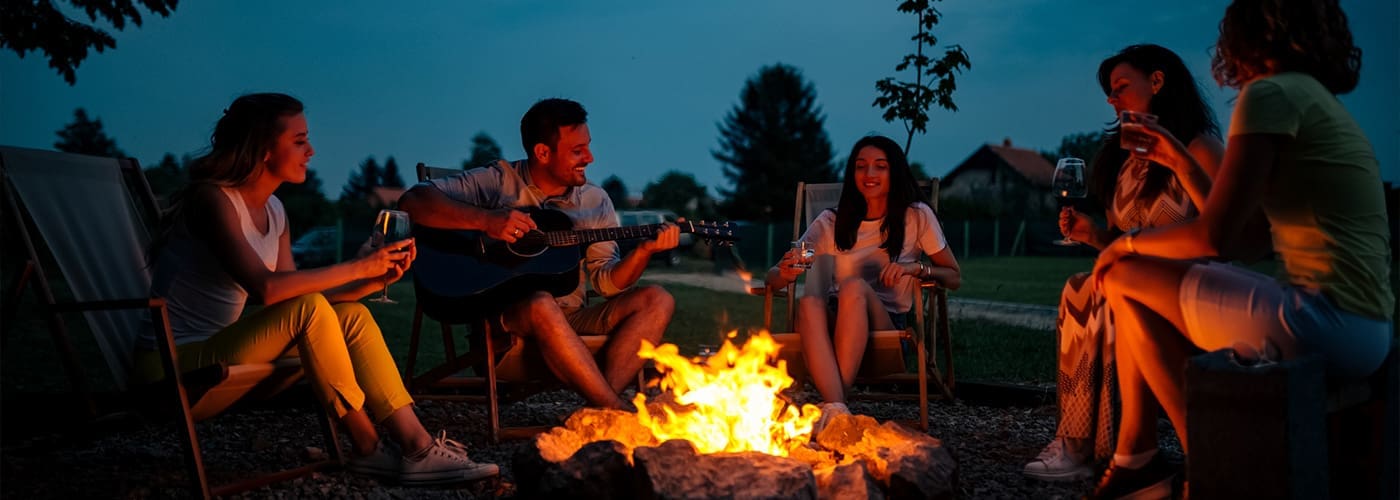
Now all that’s left is to bring out the guitar and marshmallows! Need advice on how to properly protect your home and have a worry-free summer? Contact our brokers to choose the best coverage for your situation and enjoy it with peace of mind!


